


How to Identify the Right Bucket Tooth System for Your Excavator or Loader
- Product Buying Guide
- September 10, 2026
By Construction Parts PNW Parts Team · Updated September 10, 2026
Ordering a replacement bucket tooth sounds simple—until you discover how many different tooth systems, sizes, adapters, pins and locking styles are used on excavators, wheel loaders, backhoes and other heavy equipment.
A machine's make and model are helpful, but they often aren't enough to positively identify the tooth installed on the bucket. Buckets get replaced. Attachments move from machine to machine. Previous owners may have converted the bucket to a different tooth system. And aftermarket teeth may use different markings than the original component.
The most reliable approach is to identify the tooth system first, determine its size, and then choose the correct tooth style for the application.
Quick Answer: How Do You Identify a Bucket Tooth?
Start with these five pieces of information:
- Look for casting numbers or manufacturer markings on the tooth and adapter.
- Examine how the tooth is retained: side pin, vertical pin, integrated lock or hammerless locking system.
- Photograph the tooth, adapter and retaining hardware from several angles.
- Record the machine make and model, but don't rely on the machine alone.
- Determine whether you need the same tooth profile or a different style for your working conditions.
If the original numbers are worn away, the adapter, retention system and physical dimensions can often narrow down the system.
Construction Parts can also help identify an unknown tooth from photos and machine information.
Send photos through the Part Finder
First: Understand the Difference Between a Tooth System and Tooth Style
These terms are often mixed together.
A bucket tooth system determines how the tooth fits onto the adapter and how it is retained.
Examples include:
- Aftermarket Cat-style J-Series
- Cat K Series
- KMAX
- ESCO Super V
- ESCO Ultralok
- Black Cat Revolution
- Hensley Parabolic
- H&L-style systems
A tooth style describes the shape and intended application of the replaceable point.
Common styles include:
- Standard or long
- Penetration
- Tiger
- Twin tiger
- Rock chisel
- Abrasion
- Abrasion-penetration
- Flare
- Loader
- Heavy-duty abrasion
You might have two teeth that look similar from the front but fit completely different adapters.
That's why identifying the system comes before choosing the style.
Browse bucket teeth and adapters

Step 1: Look for Part Numbers and Casting Marks
Before measuring anything, secure the machine and bucket according to the operator's manual, then clean enough dirt and packed material from the tooth to look for identification markings.
Check:
- Both sides of the tooth
- The top of the tooth
- The area near the retaining pin or lock
- The adapter
- The pin or retainer, when visible
Casting numbers can be extremely useful.
For example, J-Series components are organized into recognizable size families such as:
J200, J250, J300, J350, J400, J450, J550, J600, J700 and J800.
The CPNW catalog includes aftermarket Cat-style J-Series components. Confirm the exact size, supplied brand and availability on the listing or quote.
Cat-style J-Series teeth and adapters
Don't assume a partially visible number proves fitment. Use the number together with the adapter and retention style.
Step 2: Identify the Retention System
One of the fastest ways to narrow down an unknown bucket tooth is to look at how the point attaches to the adapter.
Different tooth families use noticeably different retention methods.
Aftermarket Cat-Style J-Series: Side-Pin Retention
J-Series is one of the most recognizable bucket tooth systems in construction equipment.
Caterpillar describes J Series as a classic horizontal side-pin retention system. The system uses a tooth, adapter, pin and separate retainer.
If you see a pin passing horizontally through the side of the tooth, J-Series should be one of the systems you investigate.
J-Series has also been in service for a long time, so there is an extensive aftermarket ecosystem of:
- Teeth
- Pins
- Retainers
- Weld-on adapters
- Bolt-on adapters
- Multiple tooth profiles
That availability is one reason aftermarket Cat-style J-Series remains important in mixed fleets.
Cat-style J-Series teeth and adapters
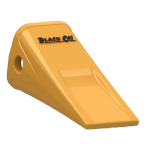
Cat K Series: Vertical Retention
Cat K Series should not be confused with KMAX.
Cat describes its K Series system as having a twist-on design with a vertical retainer, rather than the traditional horizontal side-pin design used by J Series.
The pin orientation alone can therefore provide an important clue when distinguishing J Series from K Series.
KMAX: A Komatsu-Associated Tooth System
Another source of confusion is KMAX.
KMAX and Cat K Series are not the same system.
Current Black Cat Wear Parts literature identifies KMAX as a tooth system for Komatsu replacement applications, with sizes including K25, K30, K40, K50 and K85 and profiles such as rock chisel, tiger, twin tiger and loader teeth.
KMAX has also been described as a hammerless system, so retention design is another way to distinguish it from a conventional J-Series side-pin setup.
If someone tells you they need a "K tooth," make sure you're identifying whether they mean:
- Cat K Series
- KMAX
- A tooth with a part number beginning in K
- Or simply a Komatsu-style tooth
Those aren't interchangeable descriptions.
ESCO Super V
ESCO Super V is another well-established tooth system used across construction, aggregate and utility applications.
Weir ESCO continues to manufacture genuine Super V replacement points and adapters and describes Super V as a system with a long history in these markets.
If you believe a bucket uses Super V, look for:
- ESCO markings or casting numbers
- Numbers on the point or adapter
- The shape of the adapter nose
- The retention hardware
- Previous purchase records
Because many replacement products exist in the market, a visual match by tooth shape alone isn't enough.
ESCO and ESCO-style bucket teeth
ESCO Ultralok
Ultralok is easier to distinguish from many traditional systems because the lock is integrated into the point.
ESCO describes Ultralok as a true two-piece system using an integrated hammerless lock rather than a traditional separate pin-and-retainer arrangement. Installation and removal can be performed using a pry tool.
That makes the locking mechanism an especially useful identification feature.
Black Cat Revolution
Black Cat's Revolution system uses a distinctly different hammerless retention approach.
Black Cat describes Revolution as a fully hammerless system that can be serviced with a socket wrench. Use the installation instructions for the exact Revolution system and lock.
The Revolution family also includes multiple tooth, adapter and wear-protection configurations.
For customers operating equipment already fitted with Revolution, identifying the exact Revolution family and size is important before ordering.
Black Cat Revolution system guide

Hensley Parabolic
Hensley-style teeth have their own distinctive geometry.
Hensley Parabolic is a distinct system, separate from Hensley 5 Series and XS offerings. Check the complete marking, rear pocket, adapter nose and pin arrangement. Do not apply one pin-orientation rule to every Hensley family.
The number is particularly useful if it remains visible on the tooth or adapter.
Hensley Parabolic teeth and adapters

H&L-Style Bucket Teeth
H&L-style teeth are another common system, particularly on certain backhoes, loaders and general construction attachments.
One useful identifying feature is the retention design: the common H&L 23/230 Flexpin family uses horizontal retention. Other H&L families use different arrangements, so the H&L name alone does not establish the pin design.
As with every system, confirm the series and dimensions before ordering.
Step 3: Don't Identify Bucket Teeth From the Machine Model Alone
One of the most common mistakes in bucket-tooth identification is assuming:
"It's a CAT excavator, so it must use CAT teeth."
Not necessarily.
The machine may have:
- An aftermarket bucket
- A bucket built by another attachment manufacturer
- A converted tooth system
- A replacement adapter welded to the lip
- A bucket transferred from another machine
- A completely different GET system than the machine originally used
Machine make and model are valuable clues, but the bucket itself is the final authority.
This is especially important when purchasing teeth for older equipment or used attachments.
Not sure which tooth system is on your bucket?
Send photos of the tooth, adapter and retention hardware with any part numbers and machine information. The Construction Parts PNW Parts Team can help narrow down the system and size.
Step 4: Photograph the Tooth and Adapter Correctly
When asking Construction Parts to identify a tooth system, a few good photos can save a lot of back-and-forth.
Take clear pictures of:
1. The entire bucket
This helps establish bucket type, tooth count and overall configuration.
2. The side of one tooth
We need to see the tooth profile and retention location.
3. The top of the tooth
Some locking systems are easier to distinguish from above.
4. The back of the tooth and adapter area
This is often one of the most useful identification angles.
5. Any casting numbers
Clean the area enough for the number to be readable.
6. The pin, retainer or lock
Retention hardware can quickly narrow the system.
If possible, place a tape measure next to the component in one or more photos.
Send photos through the Part Finder
Step 5: Identify the Size
Once the tooth system is known, the next step is determining the correct size.
For example, knowing that a tooth is J-Series still isn't enough.
You may be dealing with:
J250, J300, J350, J400, J450, J550 or another size.
Different tooth sizes require their specified fitment components. A shared pin or keeper listing does not make the tooth sizes interchangeable.
The adapter nose, tooth pocket, pin and retainer must match the correct family.
When markings are gone, physical dimensions of the existing tooth and adapter can help identify the series.
For a confirmed J350 assembly, see the J350 Cat-style bucket teeth page.
Step 6: Choose the Tooth Style for the Material
After identifying the system and size, you can decide whether the tooth currently installed is actually the best profile for the work.
Standard or Long Teeth
Good general-purpose options for mixed digging and loading conditions.
Penetration Teeth
Designed to concentrate force into a narrower profile, making them useful where penetration is a priority.
Tiger Teeth
Aggressive pointed profiles used when breaking into hard, compacted or difficult material is more important than maximizing wear metal.
Twin Tiger Teeth
Two pointed profiles provide aggressive penetration while also creating additional clearance.
Rock Chisel Teeth
Typically selected for tougher digging and rock applications.
Abrasion Teeth
Designed with additional wear material for highly abrasive environments where wear life is a greater concern.
Flare or Loader Teeth
A wider working profile can be useful in loading, cleanup or softer-material applications.
There is no universally "best" bucket tooth.
The best choice depends on balancing three factors:
penetration + strength + wear life
Caterpillar uses the same basic framework when discussing GET selection: the right system should balance penetration, strength and resistance to wear for the application.
When Should You Replace the Adapter Too?
A new tooth won't correct a badly worn adapter.
Inspect the nose for:
- Excessive wear
- Rounded or damaged contact surfaces
- Cracking
- Deformation
- Loose tooth fit
- Damaged retention areas
Running a severely worn adapter can cause poor tooth fit and may shorten the service life of the replacement components.
When in doubt, send pictures of the tooth and adapter together rather than ordering from the worn tooth alone.
What Information Should You Send Construction Parts?
If you aren't sure which bucket teeth you have, send us as much of the following as possible:
- Machine manufacturer
- Machine model
- Machine serial number, if available
- Bucket manufacturer
- Bucket tag or identification plate
- Tooth casting number
- Adapter casting number
- Pin or retainer number
- Clear photos
- Basic measurements
- Material you're working in
You don't need to know all of these.
Even two or three strong pieces of information can dramatically narrow the search.
Need Help Identifying Your Bucket Teeth?
Construction Parts PNW helps contractors, equipment owners, municipalities, rental fleets and repair shops identify heavy-equipment wear parts.
If the number has worn off—or you're simply not sure what system is on the bucket—send us photos.
We'll help narrow down the tooth system, size, adapter and replacement options before you order.
Have photos ready?
Send photos through the Part Finder
Browse bucket teeth and adapters
Frequently Asked Questions
Can I identify bucket teeth from the excavator model?
The machine model can help narrow the possibilities, but it should not be used alone. Buckets and tooth systems are frequently replaced or converted, so identifying the components actually installed on the bucket is more reliable.
Is KMAX the same as Cat K Series?
No. KMAX is associated with Komatsu replacement applications, while Caterpillar K Series is a separate Cat tooth system using its own vertical-retention design.
What is the easiest bucket tooth system to identify?
Systems with clearly visible casting numbers or distinctive locking mechanisms are generally easier to identify. J-Series side pins, Ultralok integrated locks and Revolution hammerless retention can provide strong clues.
Can I put a different style tooth on my existing adapter?
Often, yes—but only if the alternate tooth is manufactured for the same tooth system and size. Changing from a standard tooth to a tiger or abrasion tooth doesn't necessarily require changing the adapter, but changing to a different tooth system usually does.
What if all of the numbers have worn off?
Send clear pictures of the tooth, adapter and retaining hardware along with machine information and measurements. Physical geometry and retention style can often narrow down the system.
Are aftermarket bucket teeth available?
Yes. Many common systems have aftermarket replacement options. Construction Parts can help determine whether an aftermarket replacement, genuine manufacturer component or system conversion makes the most sense for the application.
Related guides
Read J-Series vs KMAX vs Super V: Comparing Common Bucket Tooth Systems. If you are inspecting a used machine or attachment, see Safeguard Your Investment When Buying Used Heavy Equipment.
Technical references
System descriptions were checked against manufacturer and authorized supplier literature. These references describe system design; they do not confirm fitment for an individual bucket.
- Caterpillar bucket tooth systems
- Black Cat Komatsu replacement teeth catalog
- McHale Komatsu KMAX system overview
- ESCO Super V system literature
- ESCO Ultralok system
- Black Cat Revolution RV
- H&L Flexpin identification
Find the right replacement before you order
Browse the Bucket Teeth & Adapters hub, send photos to the Part Finder, or request a quote. Call 253-255-1775 to discuss fitment and availability.
Construction Parts PNW helps equipment owners and parts buyers identify wear parts using component markings, photos, measurements and machine information. Confirm the supplied brand, exact part number and included hardware on your listing or quote.

Get Expert Help with Heavy Equipment Wear Parts
Have questions about wear parts, ground engaging tools, or equipment maintenance? Our experienced team is here to help. Construction Parts PNW works directly with contractors, municipalities, and fleet managers to identify the correct wear parts and solutions for excavators, loaders, dozers, graders, skid steers, and road maintenance equipment.
Whether you’re researching replacement options, troubleshooting wear issues, or planning seasonal maintenance, our team can help you find durable solutions that reduce downtime and extend equipment life. We support bucket teeth, cutting edges, rubber tracks, undercarriage components, sweeper brooms, and custom wear solutions for a wide range of equipment brands.
Submit a Part Finder Request and let our knowledgeable staff help you identify the right part for your machine.
Related

J-Series vs KMAX vs Super V: Comparing Common Bucket Tooth Systems
Compare J-Series, KMAX, Super V and other common tooth systems by fitment, retention, size and application. Learn what to verify before selecting a replacement.
- Product Buying Guide
- September 10, 2026